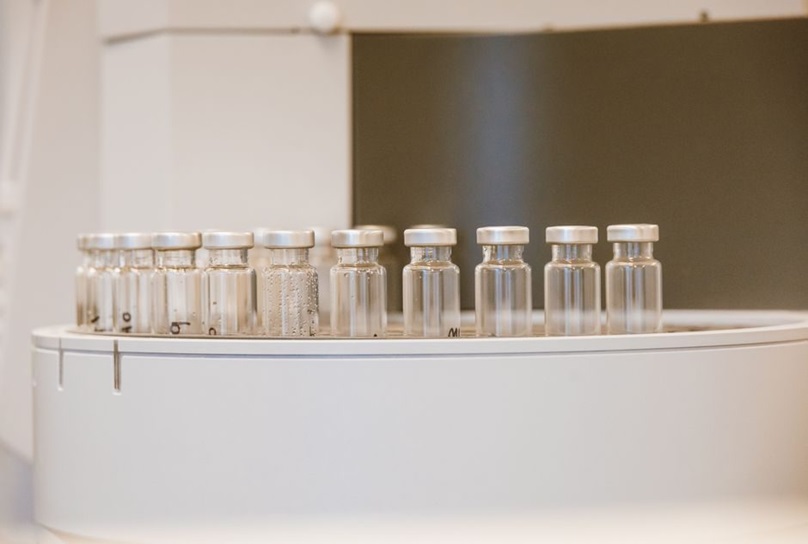
A vial that has been thawed and refrozen five times looks exactly like one that has been thawed once. Nothing about its appearance changes. What has changed, in ways a standard visual check will never catch, is the structural integrity of whatever peptide sits inside it.
Key Takeaways
- Repeated freeze-thaw cycling is a well-documented source of protein and peptide degradation, distinct from the damage caused by storage temperature alone.
- Mechanical stress at the ice-liquid interface, not just temperature change itself, is a major driver of aggregation and structural loss during thawing.
- Studies on plasma proteins and peptide biomarkers consistently show measurable degradation after as few as three to five freeze-thaw cycles.
- Aliquoting a sample into single-use portions before the first freeze is the most effective way to remove this variable from a research protocol entirely.
- A peptide’s freeze-thaw history is rarely recorded in day-to-day lab practice, which means it is often the unexamined variable behind an inconsistent assay result.
The mechanism is not exotic. Every freeze-thaw cycle exposes a peptide to ice crystal formation, localised concentration effects as unfrozen solvent shrinks around growing crystals, and shear stress as those crystals form and dissolve again. None of that requires a lab error. It happens simply because the sample was frozen, thawed, and frozen again.
What the Evidence Actually Shows
A frequently cited 2007 study on plasma protein stability found that repeated thawing led to measurable protein degradation, concluding plainly that “repeatedly thawing samples can lead to protein degradation.” That finding was made on general plasma proteins, but the underlying mechanism, structural stress at each phase transition, applies to isolated peptides just as directly, and in some cases more severely, because smaller peptide structures have less buffering capacity against aggregation than larger folded proteins.
A separate study specifically examining GLP-1 and related peptide biomarkers in plasma samples found that freeze-thaw cycling measurably affected stability across the cycles tested, reinforcing that this is not a theoretical concern limited to one class of molecule. The pattern holds across peptide types: the more times a sample transitions between frozen and liquid states, the less confidently a researcher can treat its later measurements as equivalent to its first.
The degree of degradation is not uniform across every peptide, which is part of why the risk is easy to underestimate. Larger, more structurally stable molecules can tolerate a handful of cycles with relatively little measurable change, while shorter or more conformationally flexible peptides can show meaningful losses after far fewer. A protocol built around the assumption that “a few thaws never hurt” is really borrowing an assumption from a different molecule’s stability profile, not testing its own.
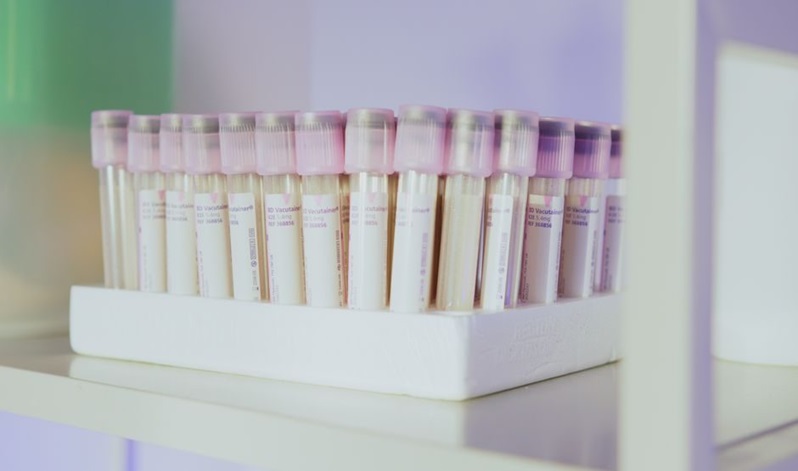
Vials of frozen samples stored in a laboratory container
Why This Gets Overlooked in Practice
Freeze-thaw damage is easy to miss because nothing about it announces itself. A degraded peptide does not usually change colour or clump visibly at the concentrations typically used in research. The first sign is often an assay result that does not replicate cleanly, and at that point the freeze-thaw history is rarely the first thing anyone checks, because it was never logged.
That gap between what happens physically and what gets recorded is the real problem. A lab that carefully tracks reagent lot numbers and instrument calibration dates, but has no record of how many times a given vial has been through a freeze-thaw cycle, has a blind spot in exactly the place where a lot of unexplained variability originates.
The freeze-thaw count is one of the few variables a lab controls completely and tracks least consistently.
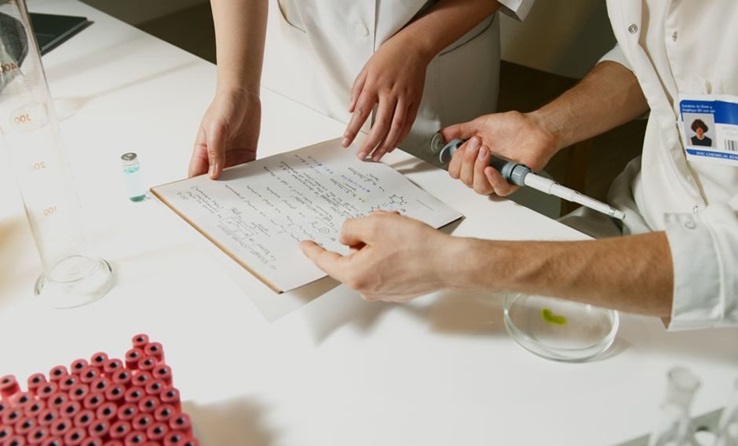
Laboratory documentation and sample logs on a desk
Aliquoting as the Practical Fix
The most consistent recommendation across biobanking and sample-handling literature is straightforward: split a sample into single-use aliquots before the first freeze, rather than repeatedly accessing one larger stock vial. This removes the freeze-thaw variable from the experiment altogether, because each aliquot is only ever frozen and thawed once.
The trade-off is upfront planning. Aliquoting requires estimating how much peptide a given experimental series will actually need and portioning accordingly, which is more effort than drawing from a single vial as needed. Biobanking guidance treats this planning step as standard practice precisely because the alternative, discovering degradation after results come back inconsistent, costs considerably more time to diagnose.
Where a peptide arrives from a supplier already reconstituted or in a form intended for repeated access, the calculation shifts further towards aliquoting immediately on receipt. UK research peptide supplier peakpeptides.co.uk provides research compounds such as Retatrutide 20mg with batch documentation that gives researchers a clear starting point for building their own aliquot and freeze-thaw log from day one, rather than reconstructing that history retrospectively.
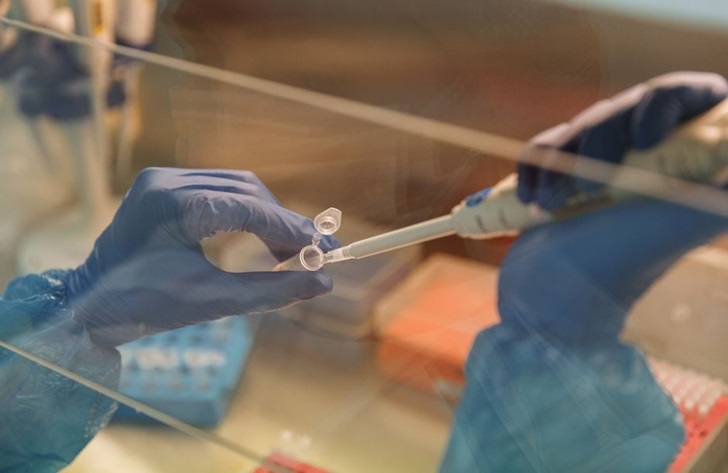
Researcher pipetting sample into small vials
Building a Freeze-Thaw Log Into Standard Practice
A freeze-thaw log does not need to be complicated. A simple record of the date and number of freeze-thaw events per vial, kept alongside existing sample tracking, is enough to flag a vial that has been through more cycles than the rest of a batch before it becomes the unexplained variable in a result.
This matters most for longer research programmes, where the same stock vial might reasonably be accessed over weeks or months. The earlier a lab establishes the habit of logging freeze-thaw events, the less time gets spent later trying to work out why one batch of results does not match another drawn from the same original sample.
A useful discipline is to treat the freeze-thaw log the same way a lab already treats an instrument’s calibration record: something checked before, not after, a result gets flagged as unusual. When two runs from what should be an identical sample diverge, the freeze-thaw count is one of the first, cheapest things to compare, and it is only available to compare if someone wrote it down at the time.
Frequently Asked Questions
How many freeze-thaw cycles does it typically take before degradation becomes measurable?
Published studies on plasma proteins and related biomarkers report measurable degradation from as few as three to five cycles, though the exact threshold varies by peptide structure and storage conditions.
Is freeze-thaw damage the same as damage from poor storage temperature?
No, they are related but distinct mechanisms. Storage temperature affects gradual chemical degradation over time, while freeze-thaw cycling adds mechanical and structural stress at each phase transition, and a sample can suffer from one without the other.
Does aliquoting completely eliminate freeze-thaw risk?
It eliminates repeated freeze-thaw exposure for each aliquot, since each portion is only frozen and thawed once, but it does not address other degradation pathways such as prolonged storage time or temperature excursions during transport.
Why is freeze-thaw history rarely recorded in typical lab workflows?
Because nothing about a freeze-thaw cycle produces an immediate, visible signal, it is easy for a lab’s existing tracking systems, built around reagent lots and instrument logs, to simply never capture it.
Should freeze-thaw count be treated as seriously as expiry date when assessing a sample?
For any research where reproducibility matters, yes. An unexpired sample that has been through numerous freeze-thaw cycles can behave less predictably than a fresher sample with a documented single-thaw history.